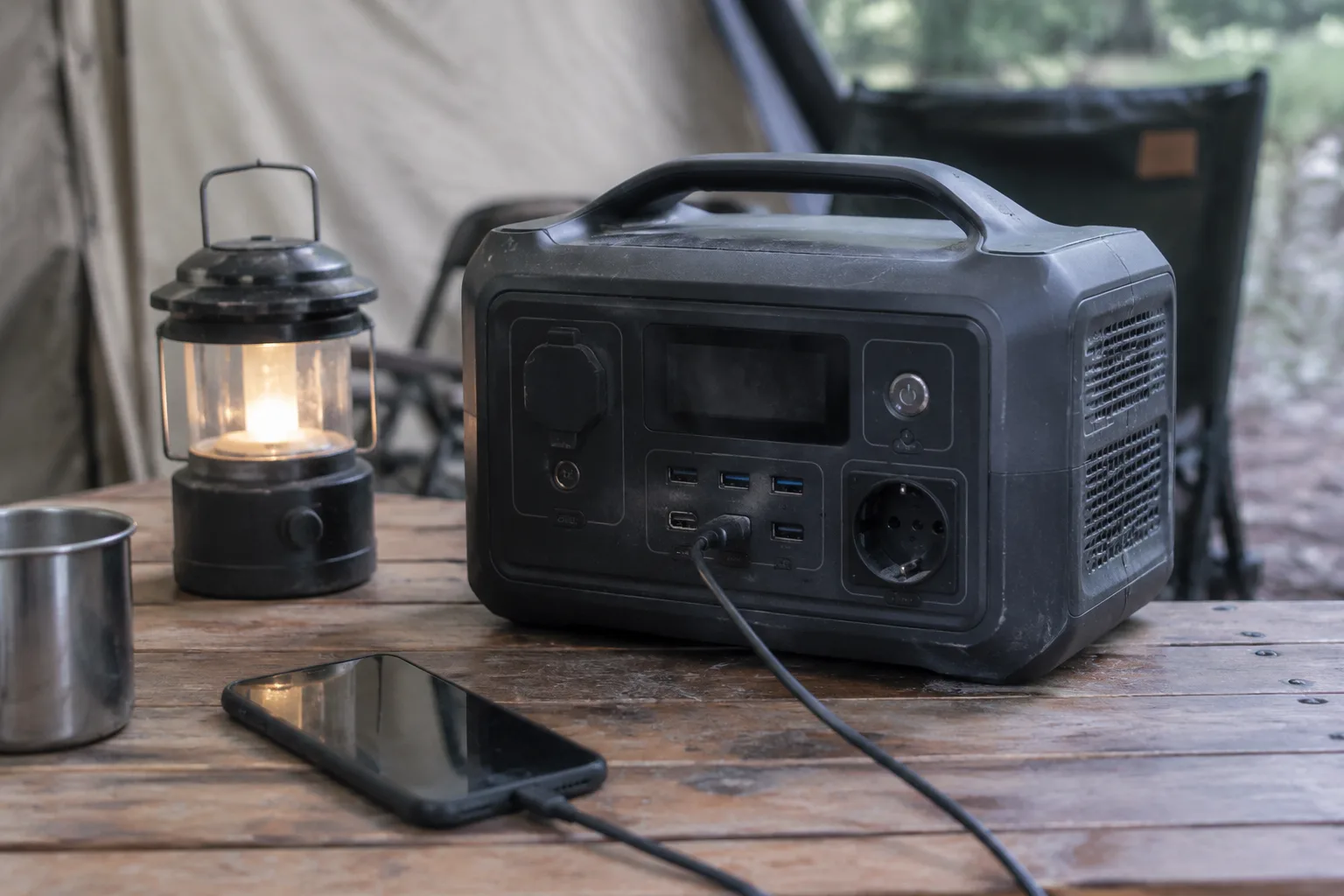
Two identical-looking portable power stations sit on a shelf, one priced at $249 and the other at $1,899. The cheap one advertises 300 watts of output. The expensive one advertises 3,600. A shopper scanning the boxes might conclude the price gap tracks the wattage gap almost exactly, and that buying the bigger number is simply a matter of budget. That conclusion is wrong in a useful way. The relationship between what a power station costs and what it delivers is lumpy, full of cliffs and dead zones, and the worst purchases tend to happen at the edges of the market where the marketing is loudest.
Portable power stations occupy a strange category. They are batteries with inverters bolted on, sold to campers, van dwellers, tailgaters, and people who have watched one too many storm-season news segments. The market has exploded in the past several years, and with it a fog of specs: watt-hours, surge watts, cycle life, LiFePO4 versus lithium-ion, pass-through charging, MPPT input. Most buying guides treat these as a checklist to maximize. A calmer approach treats the price question as a sizing problem, and sizing problems have a right answer that is usually smaller than the sales page suggests.
The Number That Actually Sets the Price
Watt-hours is the figure that matters, and it is the one shoppers skim past. A 1,000-watt station that holds 500 watt-hours will run a 500-watt device for roughly an hour, minus inverter losses that typically eat 10 to 15 percent. The wattage rating describes how much can flow out at once. The watt-hour capacity describes how long the tank lasts. Price tracks capacity far more tightly than it tracks output, which is why two stations with the same 2,000-watt inverter can differ by $700 depending on whether one holds 1 kWh or 2 kWh.
A rough market map, based on typical pricing across the major brands: small 250 to 300 Wh units cluster around $200 to $300. The 500 to 600 Wh class runs $400 to $600. The 1,000 Wh class sits near $900 to $1,200. Above 2,000 Wh, prices climb past $1,800 and keep going. These are moving targets, since sales and generational refreshes scramble the numbers constantly, but the shape holds. Each doubling of capacity adds roughly 60 to 80 percent to the price, and that premium buys real cells, a bigger inverter, and a heavier chassis.
Why the Cheap End Is a Trap
The $199 stations with the cheerful orange packaging and the 400-watt claim deserve scrutiny. Many of them use older lithium-ion cells with a few hundred charge cycles before capacity fades noticeably, and the advertised capacity sometimes reflects a cell rating rather than usable output. A station marketed as 300 Wh might deliver 240 Wh to a device after inverter losses and conservative discharge limits. That is a legitimate engineering choice, but it means the sticker number overstates what the owner gets.
The deeper problem at the low end is that these units are sized for tasks they cannot finish. A 300 Wh station will charge a phone many times over, run a laptop through an afternoon, and power a small fan overnight. It will not run a camp stove, a space heater, or a coffee maker, all of which draw far more than the inverter can supply. Buyers who purchase at this tier expecting to run small appliances end up disappointed, then buy again at the next tier up. The entry-level station becomes a $200 lesson.
The Sweet Spot Sits Around 1,000 Watt-Hours
For most households that want one box to cover camping trips, a few days of outage, and the occasional remote workday, the 1 kWh class is where the math starts to make sense. A 1,000 Wh station with a 1,000 to 1,500-watt inverter can run a full-size refrigerator for several hours, charge a laptop a dozen times, keep phones and a router alive for days, and power a CPAP machine through multiple nights. It weighs 25 to 35 pounds, which is car-portable if not backpack-portable.
This tier also tends to get the good battery chemistry. Lithium iron phosphate, usually shortened to LiFePO4, has become standard above the $500 mark, and it matters. These cells tolerate 3,000 to 5,000 charge cycles before dropping to 80 percent capacity, compared with 500 to 800 for older lithium-ion packs. A station that cycles 3,000 times and gets used twice a week will outlast its owner's interest in camping. The chemistry is the single best reason to spend up from the $300 tier.
Where the Money Stops Buying Anything Useful
Above roughly 2,000 Wh, the value curve flattens hard. A 3,600 Wh station priced near $3,000 will run a window air conditioner for a few hours or a microwave for a while, but the same money buys a small gas generator that runs for days on a few gallons, or a modest home battery installation that ties into the breaker panel. The portable unit's advantage is silence and indoor safety, and those are real. The price per watt-hour, though, gets worse at the top, not better, because the inverter, cooling, and chassis costs scale steeply.
There is also a weight cliff. Anything past 2,000 Wh tends to weigh 45 pounds or more, which turns "portable" into a euphemism. A unit that lives in the garage and gets dragged out twice a year could be a generator or a fixed battery. A unit that rides in the trunk of a car on weekend trips needs to stay under 40 pounds, and that ceiling caps useful capacity around 1,200 Wh for most people.
The Hidden Cost of Charging Speed
One spec that rarely appears in the headline price comparison is recharge time. A 1,000 Wh station that takes eight hours to refill from a wall outlet is a different product from one that takes 90 minutes. The fast-charging units cost more, sometimes $150 to $300 more at the same capacity, and the premium is worth it for anyone who plans to use the station on the road. Solar input matters similarly: a station with a 200-watt solar input limit will refill slowly from panels, while one that accepts 400 or 500 watts pairs with a folding panel array that can top it up in an afternoon.
These features are where manufacturers hide the real differentiation, and where a shopper comparing two 1,000 Wh units at similar prices should look first. The cheaper one often skimps on charge rate, solar input, and output port variety. The price gap between two stations of identical capacity is usually explained by these secondary specs, not by the cells inside.
A Sizing Method That Beats Spec Shopping
The most reliable way to set a budget is to work backward from a list of devices and their runtimes. A refrigerator draws maybe 150 watts average once cycling is accounted for, so 12 hours of backup needs about 1,800 Wh, which pushes past the sweet spot. A phone charges at 20 watts for an hour, so a dozen charges is 240 Wh. A laptop runs at 50 to 60 watts. A CPAP machine draws 30 to 60 watts depending on the humidifier setting. Add up the devices that genuinely need power during an outage, multiply by the hours, add 15 percent for inverter losses, and the number that falls out is the real requirement.
That exercise usually produces a smaller figure than expected. Most households discover that 700 to 1,000 Wh covers their actual outage needs once the refrigerator is excluded or run intermittently. The fantasy of powering the whole house through a week-long blackout drives people toward $3,000 units they use twice. The realistic list of devices, honestly tallied, points toward the $600 to $1,000 range for the majority of buyers.
What the Extra Money Buys Beyond Capacity
Spending above the entry tier also purchases safety and longevity features that do not show up on the box in large type. Better units include battery management systems that balance cells and prevent overcharge, pure sine wave inverters that run sensitive electronics without buzzing or overheating, and pass-through charging that lets the station charge and discharge simultaneously without stressing the cells. A cheap modified sine wave inverter can make a laptop power supply run hot or cause a fan motor to hum. These differences are invisible until they cause a problem.
Warranty length is another quiet signal. Five-year warranties have become common in the mid-tier, while budget units often carry one year. A station is a battery, and batteries degrade. The warranty is a proxy for how much confidence the maker has in the cells, and it is worth a few hundred dollars of the purchase price on its own.
The Case for Buying Less Than the Maximum
The instinct to buy the biggest station within budget is understandable and usually wrong. A 2,000 Wh unit that weighs 50 pounds and cost $1,800 will sit unused in a closet for most of the year, cycling its cells slowly into old age. A 700 Wh unit at $550 that fits under a desk, charges in two hours, and gets used weekly delivers more value per dollar and per pound. The best portable power station is the one that actually leaves the house.
There is a case for spending at the top of the mid-range rather than the bottom: buy the 1,000 Wh unit with fast charging and LiFePO4 cells, skip the 2,000 Wh monster, and put the savings toward a folding solar panel that keeps the smaller unit topped up on longer trips. That combination covers more real-world scenarios than a single oversized battery that never gets charged away from a wall outlet. The panel and the station together cost less than the big unit alone and weigh less combined than its chassis.
On a recent Saturday at a crowded trailhead, a family unloaded a station the size of a carry-on suitcase and wrestled it onto a picnic table while a neighboring group pulled a 12-pound unit out of a backpack and had a kettle going within minutes. The big station had more capacity on paper. The small one was the one getting used. Price tags describe what a battery can hold. The trip describes what it is worth.