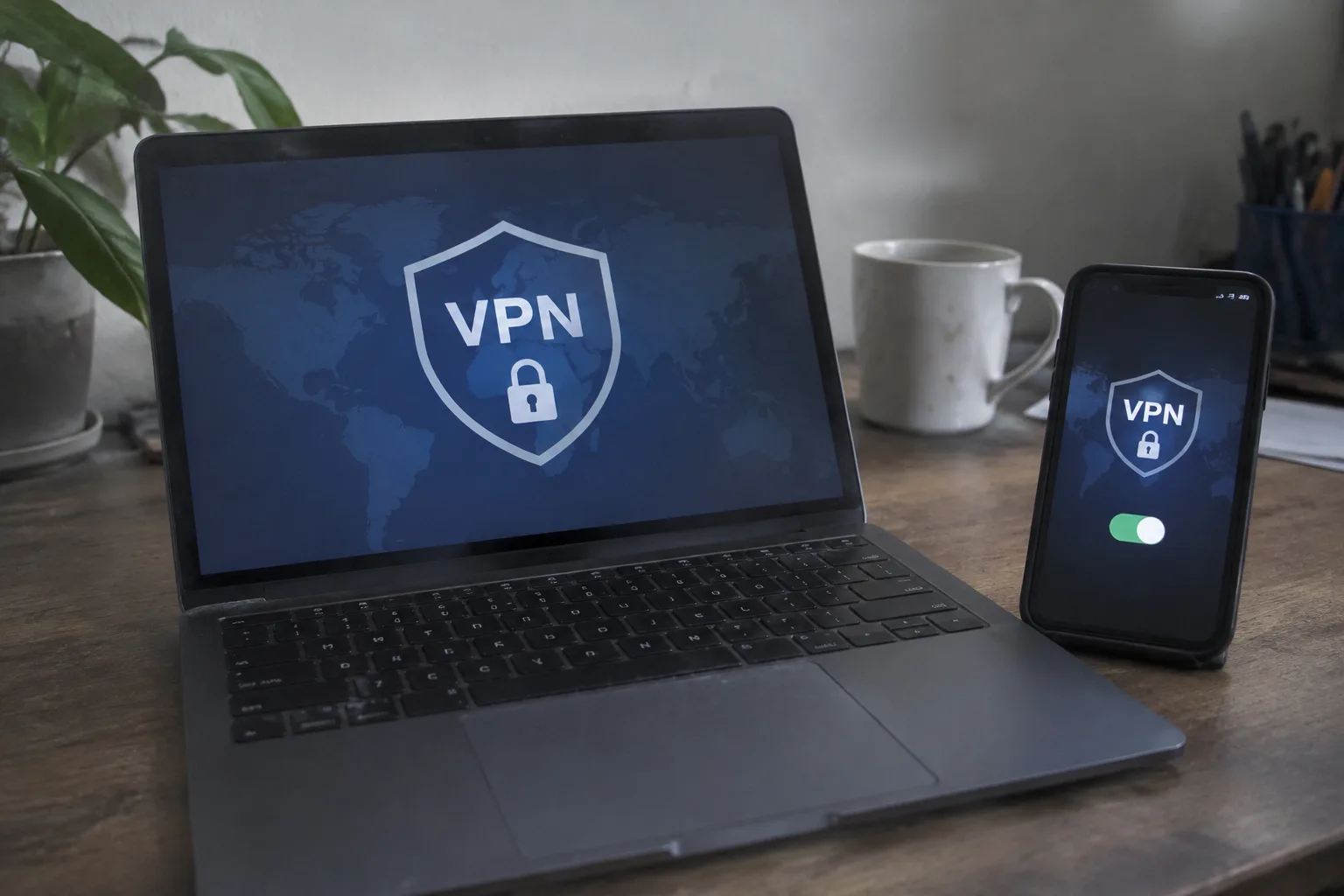
A VPN sold as a privacy cure is one of the odder purchases in modern computing. The technology itself is old and dull: an encrypted tunnel between a device and a server somewhere else, wrapped in software that usually takes four minutes to install and then mostly disappears. What that tunnel actually changes about a person's life depends almost entirely on where they sit, what they do online, and who is watching the network they sit on.
Most of the marketing glosses over this. The industry has spent a decade selling a single product to everyone, priced at a few dollars a month, with claims about anonymity that range from overstated to false. The people who genuinely benefit from paying for a VPN form a narrower group than the ads suggest, and the people who can skip it form a wider one.
What the tunnel actually hides
A VPN does one thing well. It moves the point at which traffic leaves a private network. Without one, a laptop on a cafe network sends requests straight out through the router, and the person running that network can see which domains are visited, even if the pages themselves are encrypted. With one, the router sees a single encrypted stream to a server in another city. The local observer learns almost nothing beyond the fact that a VPN is in use.
That is a real protection, and it is narrow. The VPN provider now sits in the same position the cafe router occupied. Whoever runs that server can see the same metadata the coffee shop could have seen. Paying for a VPN means choosing which company gets to watch the traffic, ideally a company with a stated no-logs policy and an audit to back it up. It does not make a person invisible. It relocates the trust.
Anyone who reads the ads closely will notice the sleight of hand. The tunnel protects traffic from the local network. It does not protect a person from the websites they log into, from the browser fingerprint that identifies them anyway, or from the account that ties every request back to a name and an email address.
The traveler on hotel and airport Wi-Fi
The clearest case for a paid VPN is travel. Airport lounges, hotel lobbies, and the Wi-Fi on a long-haul train are shared networks run by strangers, sometimes badly secured, occasionally operated by someone with an interest in what passes through. A traveler who checks a bank balance or opens a work email on a hotel network is exactly the person the tunnel was built for.
This matters more for some trips than others. A two-day stay with a phone on cellular data barely needs it. A month of remote work from rented apartments, cafes, and conference venues does. The frequency of untrusted networks is the variable, and the paid VPN earns its annual fee the first time a person connects to a network they do not control and cannot inspect.
There is a second travel use that gets less attention: access. Streaming catalogs and some banking portals refuse connections from outside the home country. A VPN exit in the right place can restore access to a library of shows or a portal that blocks foreign logins. This is a convenience feature, and it is the one most people actually notice day to day.
Remote workers on networks they cannot audit
A person who works from home on a fiber line has little to gain from a VPN on that connection. The home router is theirs, the ISP is a known quantity, and the traffic is already encrypted by the sites themselves. The calculus shifts for anyone who works from co-working spaces, client offices, or public buildings where the network belongs to someone else.
Corporate laptops often solve this with a company VPN, which routes work traffic through the employer's own infrastructure. That covers work email and internal systems. It does not cover the personal laptop sitting next to it, or the phone used to check a personal account during a lunch break on the same shared network. The paid consumer VPN fills that gap, and for a remote worker who moves between locations every week, the gap is worth closing.
People whose ISP has a business model built on watching
In some countries, internet providers are permitted to collect browsing history and sell aggregated data to advertisers. The United States is one of them, and the rules have loosened over the past decade rather than tightened. A person on such a connection, who would rather not have a profile of their reading habits assembled by a company they did not choose, has a legitimate reason to route traffic through a provider with a different policy.
This is the quiet, unglamorous use case, and it is the one that most closely matches what a paid VPN actually delivers. It will not stop a determined advertiser from tracking a logged-in session. It does keep the local pipe from becoming a data source.
The person on a locked-down network
Some networks block more than they should. A university campus that throttles certain services, an office that filters categories of sites broadly, a country that restricts access to messaging platforms. A VPN is the standard workaround, and for a person who needs to reach a blocked service for work or family reasons, the monthly fee is trivial against the alternative.
The caveat here is legal and practical. In some jurisdictions, using a VPN to circumvent restrictions carries risk, and the tool that hides traffic from a local network also attracts attention from anyone monitoring for its use. A person in that situation should understand the local rules before subscribing, and should not treat a consumer VPN as a shield against a state-level observer.
Who can skip it without regret
The largest group of people who do not need a paid VPN are those who rarely leave a trusted network. A home connection, a phone on a mobile plan, a work laptop on a corporate VPN: that combination covers most of daily life for a great many people, and adding a consumer VPN on top changes very little.
There is also the browser question. Many of the threats a VPN is sold to address, such as tracking scripts and fingerprinting, are handled better by a browser with tracking protection switched on and a password manager doing its job. A person who has not yet set up two-factor authentication on their email account will get more security from that five-minute task than from a year of VPN subscription.
And then there is the free tier. Several reputable providers offer limited free plans, usually capped on data or server locations. For occasional use on a hotel network, a free tier from a provider with a real privacy policy is a reasonable substitute for a paid plan. The paid version buys speed, more locations, and a clearer promise about logs, which matters for heavy users and matters little for someone who connects twice a year.
What the subscription fee is really buying
A paid VPN is not a privacy product in the way the ads imply. It is a network relocation service with a privacy side effect. The fee buys a server in a chosen city, a promise about what that server records, and the engineering to keep the tunnel fast enough to use. The promise is only as good as the company's incentives and its audits, which is why the cheap lifetime deals from unknown brands deserve suspicion: a provider that charges a one-time fee for a decade of bandwidth has to make money somewhere, and the somewhere is usually data.
The reasonable test is simple. Does the person connect to networks they do not control, with any regularity? Do they live somewhere the local provider is allowed to monetize browsing history? Do they need to reach a service that blocks their region? If any of those answers is yes, a paid plan from an audited provider is money well spent. If all three are no, the subscription is a monthly donation to a company that will mostly sit idle.
The dullest truth about the category is that the tool works exactly as advertised and the advertising oversells what the tool does. A person who buys one knowing that will be satisfied. A person who buys one expecting anonymity will spend the first month checking whether their real location leaks, and the second month wondering why the streaming service still knows who they are.