Robot mops occupy a strange corner of the appliance market. The cheapest ones cost less than a decent dinner for two, and the most expensive cost more than a used car. Between those poles sits a spread of machines that all promise essentially the same thing: a spinning or vibrating pad that drags itself across a hard floor while the owner is elsewhere. The price tiers are not arbitrary, but they are also not a straight line from bad to good. Each step up the ladder buys a specific capability, and past a certain point the money stops buying cleaning and starts buying convenience.
What the sub-$200 tier actually does
A robot mop under roughly $200 is a wet pad on wheels. That is the whole machine. It has a small tank, a microfiber cloth, and a motor that pushes it in a pattern that is closer to wandering than to mapping. Most of these units have no lidar, no camera, no real navigation. They bump, they turn, they bump again. The pad gets dirty within a single room and then keeps smearing that dirt around.
This tier has one honest use case: maintenance wiping of a small, already-clean kitchen or bathroom floor. A person who spills coffee, kicks off shoes at the door, and wants a damp pass every other day will get real value here. Anyone expecting a machine to lift dried sauce off tile will be disappointed within a week.
The water tanks are tiny, often under 200 ml, which means a single fill covers a hallway and maybe half a kitchen. The pads are thin and need hand washing after every run. Battery life is short enough that the mop often dies mid-job. These are not flaws so much as the physics of a cheap device, and the buyer who understands that will be fine.
The $200 to $400 band buys navigation, not scrubbing power
Spending into the low hundreds starts to buy spatial awareness. Lidar or camera-based mapping appears here, along with the ability to remember a floor plan and run in neat rows instead of random arcs. That single change matters more than any spec sheet suggests. A mop that covers the same strip three times and misses the corner behind the door is not cleaning; it is performing cleaning.
This tier also tends to add app control, no-go zones, and per-room scheduling. A person can tell the mop to skip the bedroom rug and hit only the kitchen tile. That is genuine utility, and it is the first point where a robot mop starts to feel like an appliance rather than a toy.
What this band does not buy is scrubbing force. The pads still rotate or vibrate at modest speed, the downward pressure is light, and dried-on food remains a manual problem. Floors with grout lines, textured tile, or years of buildup need a human hand and a stiff brush. The mid-tier mop keeps a clean floor clean. It does not rescue a dirty one.
Around $400 to $700, the mop starts washing itself
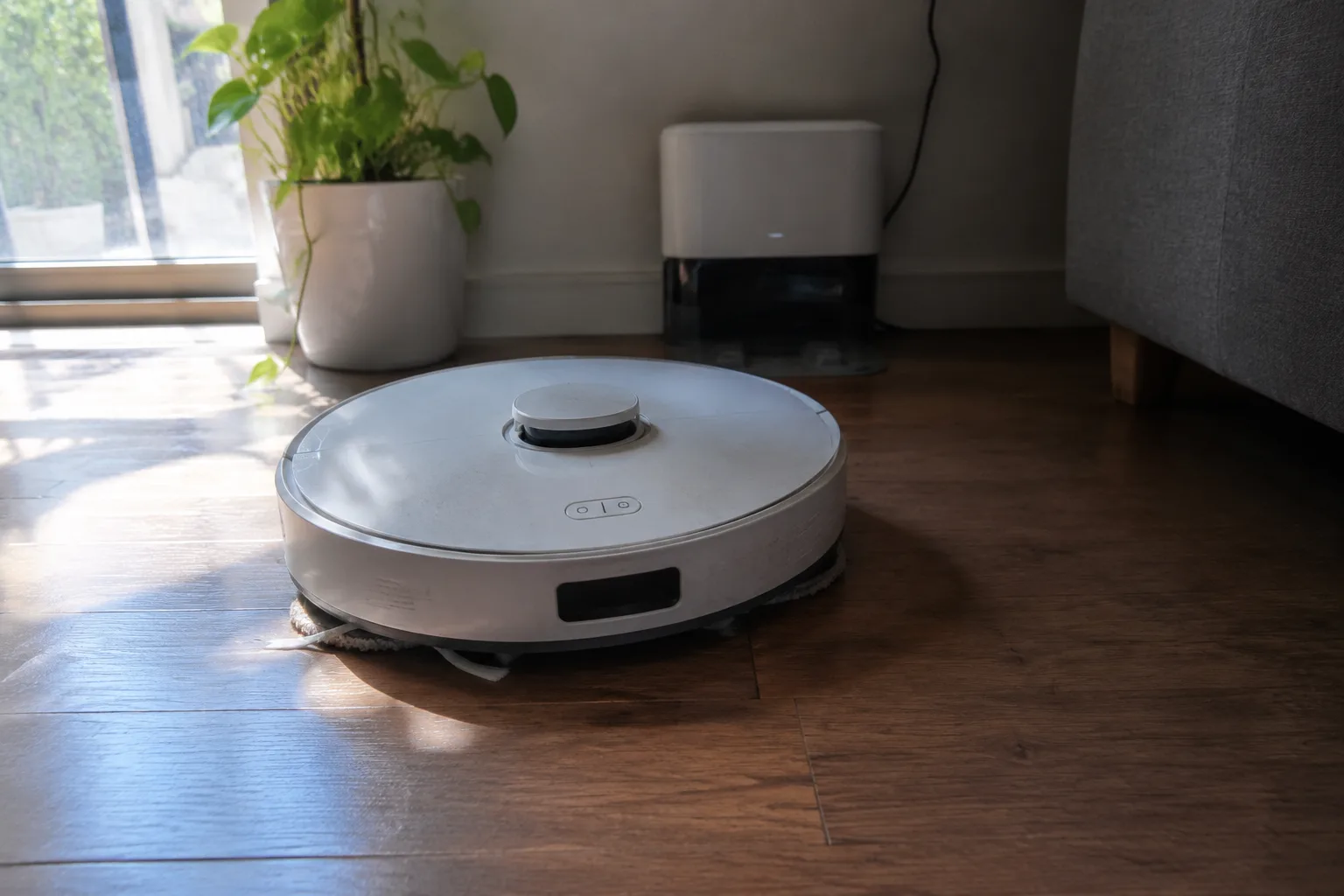
The self-cleaning dock is the headline feature of this tier, and it deserves the attention. A mop that returns to its base to rinse its own pad and refill its own tank removes the single most annoying chore in robot mopping: the post-run pad scrub. Anyone who has smelled a pad left damp in a closet for two days understands why this matters.
These docks typically hold a clean water tank and a dirty water tank, and they run a wash cycle with the pad spinning against a ridged surface. Some heat the water. Some dry the pad with warm air. The result is a machine that can run daily without the owner touching a wet cloth, which is the actual promise of the whole category.
This band also tends to bring stronger vibration or dual spinning pads, better edge coverage, and more sophisticated mapping. Scrubbing pressure improves, though it is still nowhere near what a person achieves on hands and knees. The mop handles maintenance and light soil. It still loses to a sponge on a dried ring of pasta sauce.
Above $700, the money goes to lifting and drying
The top tier adds two capabilities that sound minor and are not. The first is pad lifting: the mop raises its cleaning pads when it crosses a rug or finishes a room, so it does not drag a wet cloth across carpet. The second is heated drying, which pulls moisture out of the pad between runs and keeps the dock from developing a smell.
These features are why the expensive machines feel finished. A mop that leaves a damp stripe on a hallway runner or a bedroom rug is a mop that has to be supervised, and supervision defeats the purpose. Pad lifting turns the device into something that can run while the house is empty without a small disaster waiting on the other side of the door.
The top tier also tends to bundle vacuuming and mopping into one unit, which changes the math considerably. A machine that sweeps first and then wipes is doing the job in the correct order, and the combined unit costs less than buying two separate robots. That bundling is the strongest argument for spending at this level, stronger than any single mopping spec.
The floor material decides more than the budget
A sealed hardwood floor and a polished porcelain tile floor want different machines. Hardwood dislikes standing water and aggressive scrubbing, so a mop with fine water control and a gentle pad matters more than raw power. Tile and grout tolerate moisture and benefit from vibration and pressure. Buying a high-power scrubber for engineered wood is a way to spend money on damage.
Grout is its own problem. No robot mop on the market scrubs a grout line the way a hand brush does, and the expensive units do not change that. A person with light grout and a dog will still need a manual pass every few weeks. The robot keeps the surface clean between those passes, which is a real but limited service.
The hidden cost of cheap pads and proprietary tanks
Consumables quietly reshape the price tiers. A cheap mop with generic microfiber pads costs little to run because replacement pads are sold in bulk for a few dollars. A premium mop with a proprietary pad shape and a branded cleaning solution can cost meaningfully more per year, and the dock may refuse third-party supplies.
A buyer comparing a $250 mop to a $700 mop should price the pads and solution over two years before deciding. The gap narrows or widens depending on how often the machine runs. Daily runners should weight consumable cost heavily. Occasional users should not pay a premium for a self-cleaning dock they will use twice a month.
Where the tiers stop being honest
The $200 to $400 band is the most confusing place to shop, because the marketing leans hard on mapping and app features while the actual cleaning stays modest. A shopper can pay double for navigation and still get a mop that cannot lift a dried spill. That is not a scam, but it is a mismatch between the pitch and the performance.
The top tier has the opposite problem. The features are real, the cleaning is genuinely better, and the price is set by bundling and by dock complexity rather than by mopping quality alone. A person who already owns a good robot vacuum is paying for a second robot's worth of hardware to get a mop with lifting pads. That is a lot of money for one feature, even a good one.
A reasonable way to pick a tier
Small apartment, hard floors, no pets, and a habit of tidying before a run: the sub-$200 tier is honest and sufficient. The floors are already clean; the mop just keeps them that way.
A house with multiple hard-floor rooms, rugs at the thresholds, and a schedule that leaves the machine alone for hours: the $400 to $700 band earns its price through the self-cleaning dock and better mapping. The owner stops handling a wet pad, which is the chore that kills the habit.
A household that wants one machine to sweep and wipe, runs it daily, and has rugs scattered through the floor plan: the top tier is the only one that will not leave a damp stripe on the runner or a smell in the dock. The lifting pads and heated drying are the difference between a device that runs unattended and one that needs a babysitter.
The pad that sits damp for three days
There is a specific failure that separates the tiers more sharply than any spec. A cheap mop finishes its run, parks wherever its battery dies, and leaves a wet microfiber pad pressed against the floor or folded in a closet. Three days later the pad has a smell that does not wash out, and the mop has become a source of odor rather than a cure for one.
The self-cleaning dock solves this by rinsing and drying the pad after every run, and the top tier solves it more completely with heated drying. A person who has thrown away a sour pad knows exactly what that upgrade is worth. The price tiers, read this way, are not a ladder of cleaning power. They are a ladder of how much of the mess the machine is willing to handle on its own, including the mess it makes of itself.