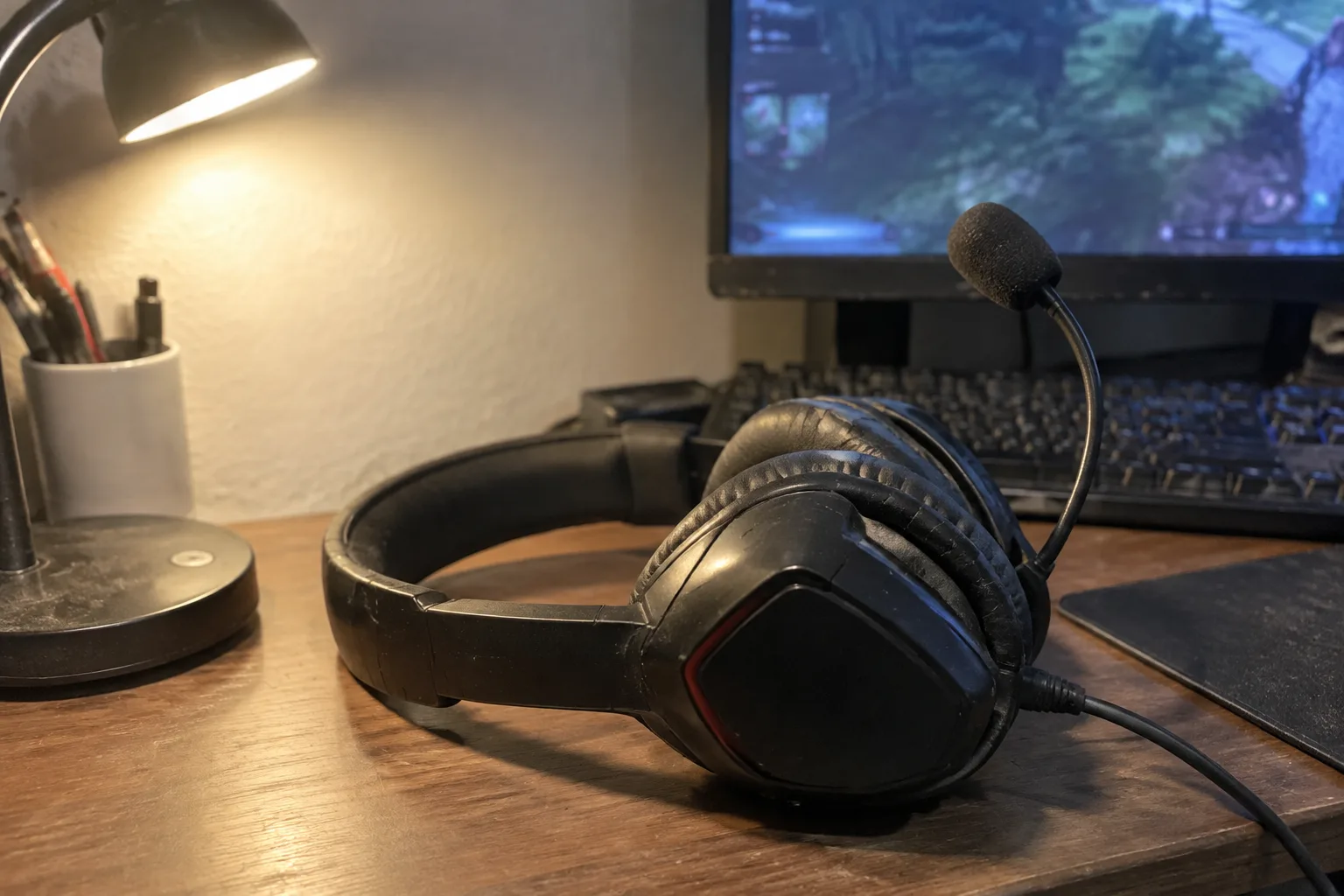
A gaming headset spends most of its life doing something other than gaming. It sits on a head during a nine-hour workday, gets dragged onto a train, becomes the thing that muffles a roommate's conversation, and only occasionally hears a gunshot. The buying advice that circulates online, though, is written as if every purchase is headed straight into a tournament. That mismatch between how headsets are sold and how they are used produces a predictable set of mistakes, and most of them cost more than the headset itself.
Treating the Microphone as an Afterthought
Nearly every buying guide ranks audio drivers first and squeezes the microphone into a footnote, which is backwards for daily use. A person on calls all afternoon needs a mic that rejects the refrigerator hum and the keyboard clatter. A headset with a glorious soundstage and a mic that picks up the neighbor's television is a bad headset for the actual job it does eight hours a day.
The practical test is simple: record a thirty-second voice memo in the room where the headset will be used, with the noise of that room running. Most stores will not let this happen, but a return window will. The result is often humbling. A boom mic that sits a few centimeters from the mouth, with a cardioid pickup pattern, does far more for call clarity than any marketing claim about noise cancellation. Detachable mics are worth the premium for one reason: when the mic breaks, the headset survives.
Buying for the Boom Instead of the Room
A headset tuned for competitive shooters pushes footsteps and distant gunfire forward in the mix. That tuning is genuinely useful for a certain kind of play and genuinely exhausting for everything else. Listen to a podcast through a set tuned that way and the host's voice sits thin and slightly hollow, with sibilance that starts to grate after twenty minutes.
For daily use, a flatter tuning is the better default. It makes voices sound like voices, music sound like music, and games sound like the mix the developer intended rather than a boosted treble showcase. The buyer who splits time between work and play should weight neutrality over excitement. Excitement is a seasoning, and nobody wants a diet of it.
Ignoring the Weight Number on the Spec Sheet
Grams look like trivia until hour four. A 350-gram headset is fine for a two-hour session and a slow headache by an afternoon of calls. The clamp force matters just as much, and it never appears in the spec sheet at all. A set that grips tightly enough to stay put during a jog will leave a red mark across the temples during a spreadsheet.
There is no number that guarantees comfort, because heads differ in shape as much as feet do. But two things reliably predict a problem: a headband padded with a thin strip of foam, and earcups that rest on the ears rather than around them. Over-ear cups that fully enclose the ear distribute pressure across the skull instead of the cartilage. A person who wears glasses will feel the difference within an hour, because a tight clamp drives the frames into the side of the head and the seal breaks, which quietly ruins the bass response as well.
Trusting Wireless Range Claims Over Battery Reality
Boxes advertise 40, 50, even 80 hours of battery life. Those figures come from a test at moderate volume with the lights off and the microphone unused, which is not how anyone lives. RGB lighting, a live microphone, and a chat app running in the background all draw power, and the real number lands well below the sticker.
The daily-use question is not total battery life but charging rhythm. A headset that charges over USB-C in an hour and runs a full workday is more useful than one that runs a week but takes six hours to refill. The other trap is pass-through audio: many wireless sets cannot be used while charging, or degrade to a muffled low-bitrate mode when the cable goes in. Check whether the headset works wired with the power off. That single feature decides whether a forgotten charge ruins a morning of meetings or simply becomes a minor inconvenience.
Paying for Surround Sound That Never Gets Used
Spatial audio and virtual surround are the most heavily marketed features in the category and among the least used. A large share of games and nearly all voice calls are mixed in plain stereo, and virtual surround applied to a stereo source often smears the sound rather than expanding it. The effect can be fun in a shooter and actively unpleasant on a conference call, where a colleague's voice arrives with a strange artificial echo.
Worse, many implementations are software toggles that conflict with the operating system's own spatial audio, and the result is a muddy double-processing that the user blames on the headset. A buyer who mostly takes calls and plays single-player games should put the surround budget toward a better driver and a better mic instead.
Overlooking How the Headset Connects to Everything Else
A headset is rarely plugged into one device. There is a work laptop, a personal phone, a console, and maybe a tablet, and the connection story is where daily-use frustration concentrates. Bluetooth is convenient until the headset refuses to switch from the phone to the laptop without a trip into a settings menu. A dongle solves latency for gaming but occupies a USB port and gets lost. Wired is reliable until the cable snags on a chair arm for the fortieth time.
The mistake is buying for the primary device and hoping the rest works out. Multi-point Bluetooth, which holds two active connections at once, is the single most underrated feature for anyone who juggles a laptop and a phone. On the wired side, a detachable cable with a standard 3.5 mm jack means a chewed-through cord costs a few dollars to replace instead of condemning the whole headset. These are unglamorous details, and they determine whether the thing gets used or ends up in a drawer.
Forgetting That a Headset Is Also a Pair of Headphones
Many gaming headsets are mediocre music headphones, and the buyer only discovers this on the first long flight. The tuning that flatters game effects can make a bass line sound bloated and a vocal sound recessed. If the headset will double as general listening gear, it is worth auditioning a familiar album, not just a game trailer. The same goes for isolation: an open-back design leaks sound in both directions, which is lovely at a desk and antisocial on a bus.
Skipping the Return Window Test
The most expensive mistake is keeping a headset that never quite fit. The first week is the only honest trial, and it should be structured. Wear the set for a full workday, not twenty minutes. Take a call in a noisy room. Walk to the kitchen and see where the wireless signal dies. Put on glasses and check the seal. Try the microphone with the dishwasher running. A headset that survives that week will survive the year; one that merely survives an unboxing will not.
Retailers build generous return windows into the price precisely because comfort and fit cannot be judged from a spec sheet. Treating the purchase as a trial, with a return label ready, turns a gamble into a decision. The box goes back, the refund clears, and the next candidate gets the same week of scrutiny. Somewhere in that process, a set stops being a purchase and becomes a piece of equipment, worn thin at the earcups, its cable slightly kinked, doing the quiet daily work nobody writes marketing copy about.